Bayaaz
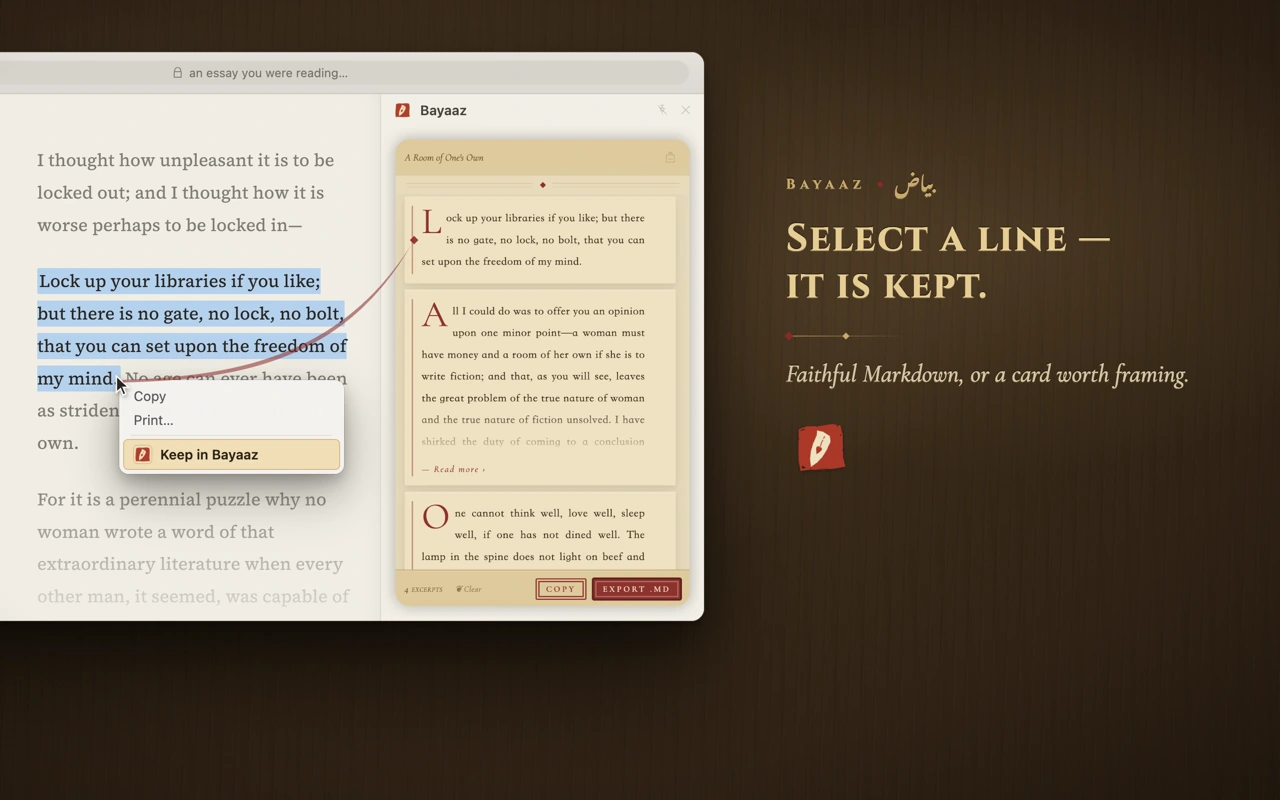
Keep the line that stopped you.
bayāz — a blank book a reader fills by hand, over years, with whatever was worth keeping. This is one for the web.
Add to Chrome See how it works
Free · No account · Works offline
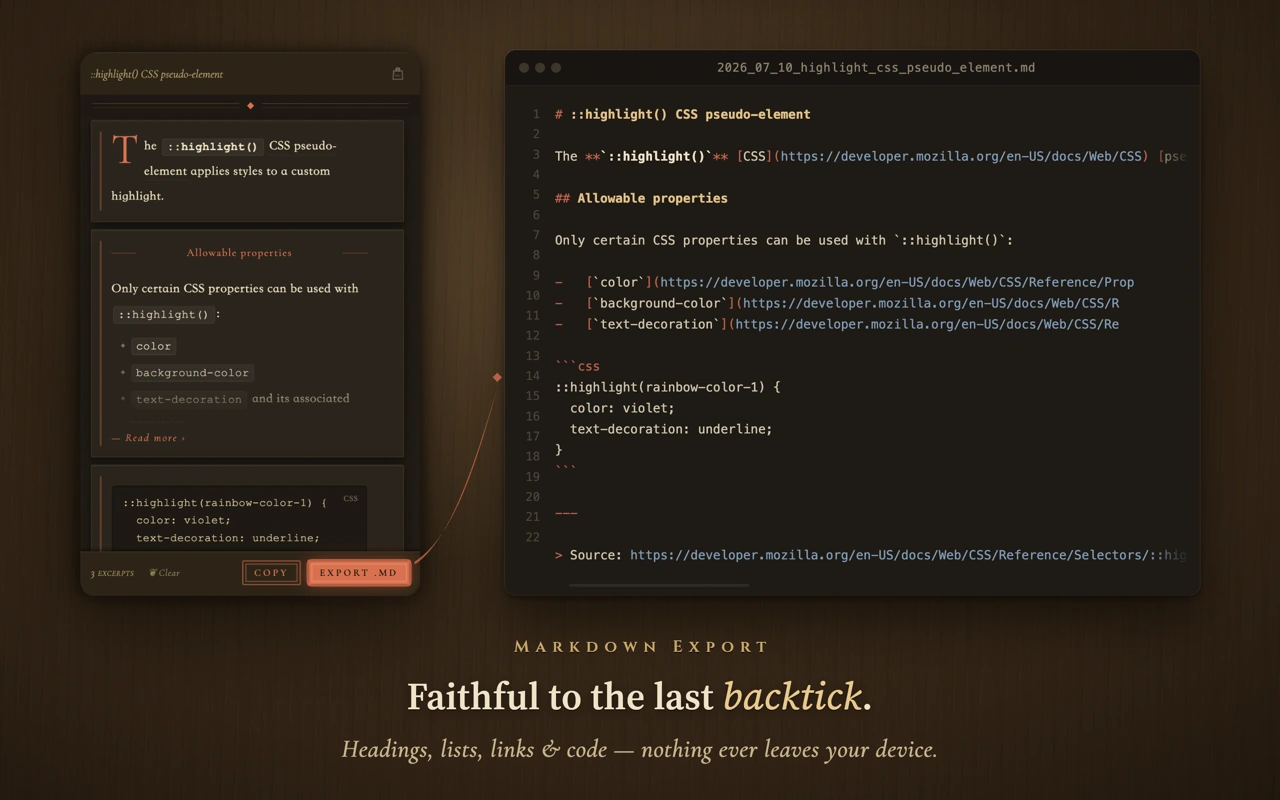
Markdown export
It comes out the way it went in.
Headings stay headings. Lists stay lists. Code keeps its fences and its language. Links keep their targets, and every excerpt carries the URL it came from and the date you kept it — so a file you open in two years still tells you where you found it.
Drops straight into Obsidian, Bear, Logseq, or a plain folder of
.md files.
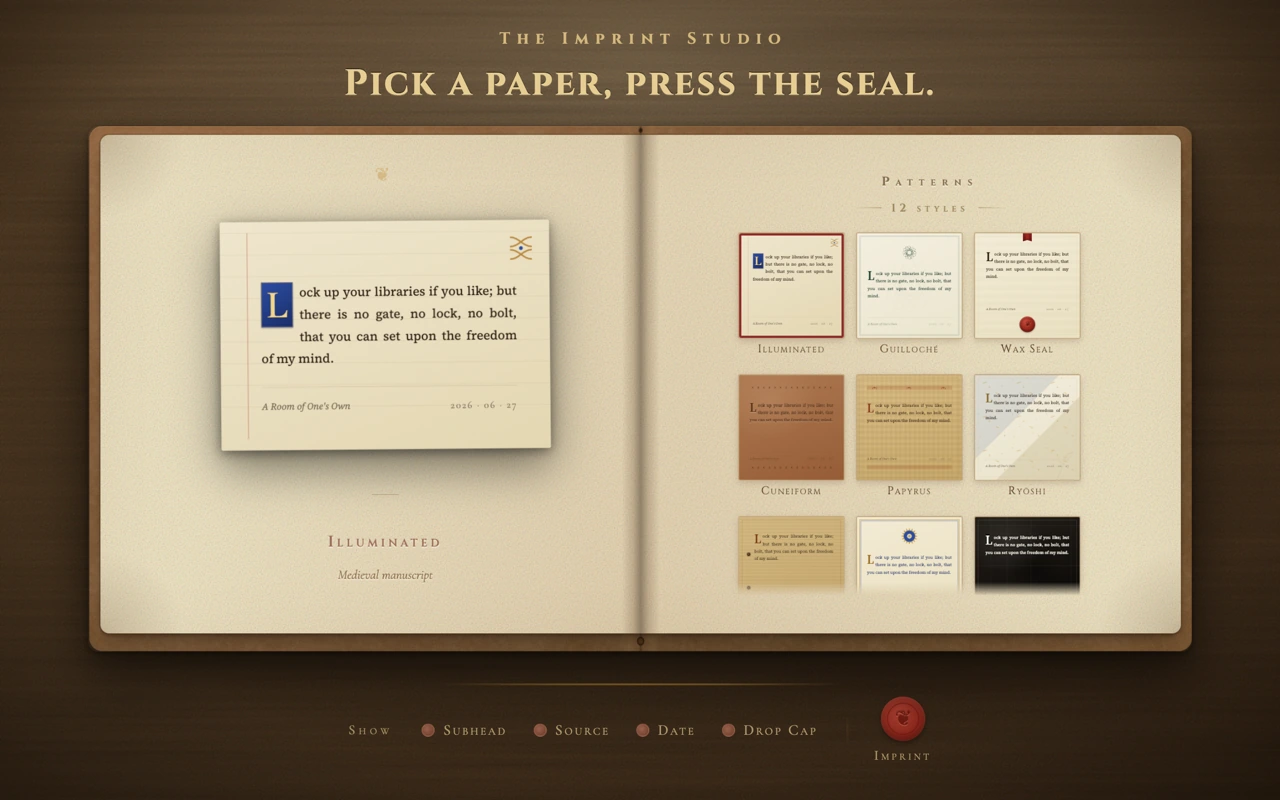
The Imprint Studio
Some passages deserve better than a text file.
Set an excerpt on paper and press the seal. Show the drop cap or hide it; keep the source line, the date, the subhead, or strip them all away. Save the card as an image, print it, give it to someone.
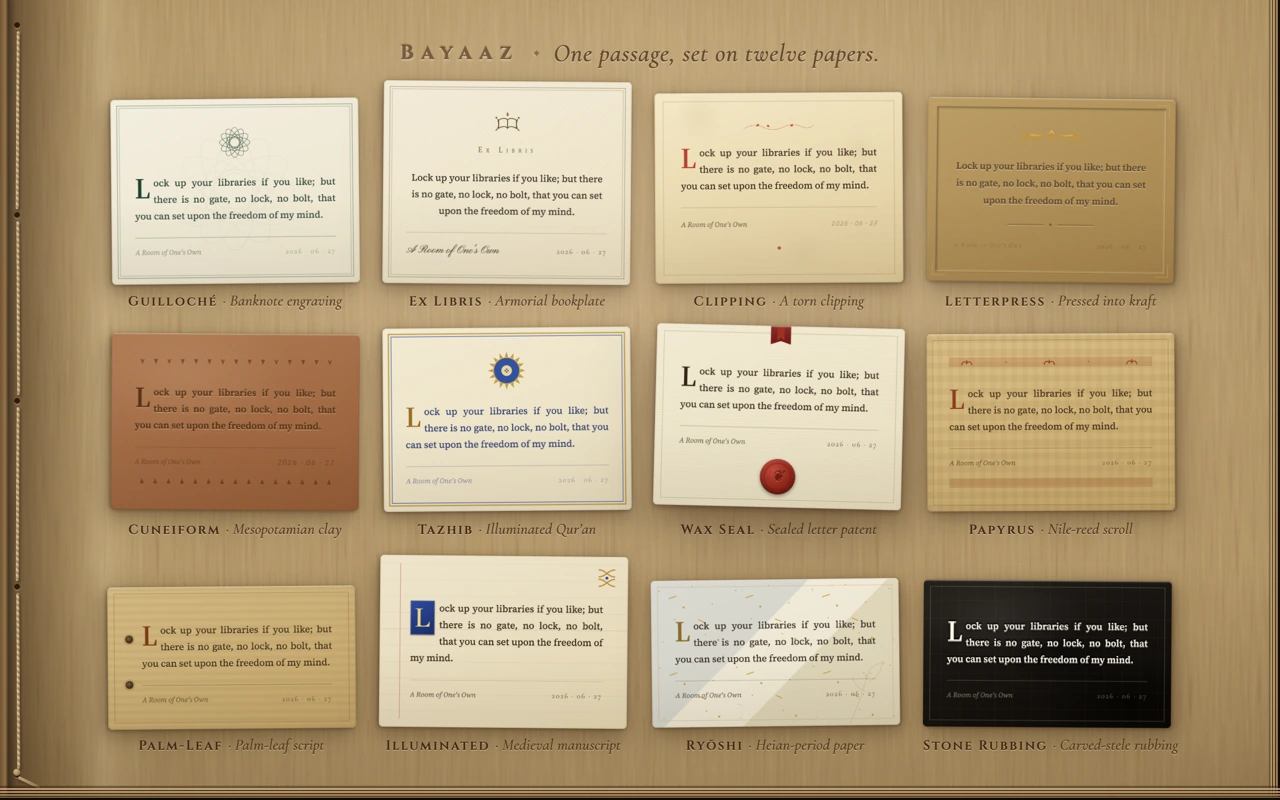
Twelve papers
Each one is a real one.
Guilloché from banknote engraving. Ex Libris from armorial bookplates. Tazhīb from illuminated Qur'ans. Cuneiform pressed into Mesopotamian clay, papyrus cut from Nile reed, ryōshi from Heian Japan, a rubbing lifted off a carved stele. The ornament, the proportions and the way the type sits follow the original.
Scripts
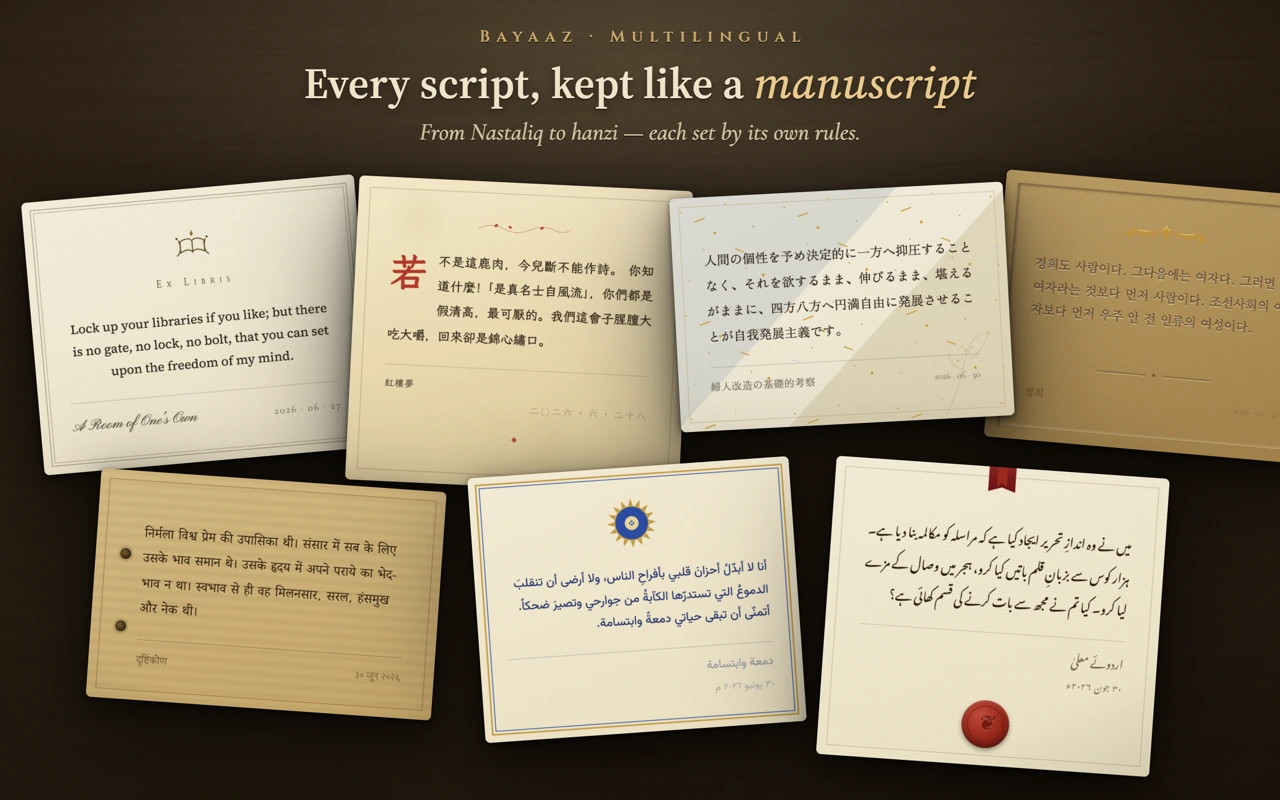
Nastaʿlīq is not Latin with different letters.
Urdu and Arabic run right to left and need their own line height to breathe. Chinese and Japanese want their own punctuation and their own margins. Devanagari hangs from a line; Hangul sits on one. Bayaaz sets each script by its own rules rather than forcing all of them through the same one.
Offline by construction
Nothing you keep ever leaves your device.
There is no account and no sync, because there is no server. Bayaaz saves excerpts to your browser's own storage and reads nothing else. It has no analytics. It makes no network requests at all. When you export, your browser writes the file to your disk and that is the end of it.
This isn't a promise that could quietly change next quarter — it's how the extension is built.
The Studio
Feltlife
Feltlife Ltd is a one-person software studio. We make small, careful tools for people who read and write for a living, and we publish them ourselves.
Bayaaz is the first, and it is free. A paid Pro tier is planned for late 2026, sold through Paddle. More tools for the browser and the desktop will follow. The studio also takes on commissioned writing and editorial work.
Registered in England and Wales. Worked on remotely, from wherever the reading is good.
Contact
Say hello
Questions, bugs, and requests for a thirteenth paper all go to the same place — hello@feltlife.art. A real person reads it.